
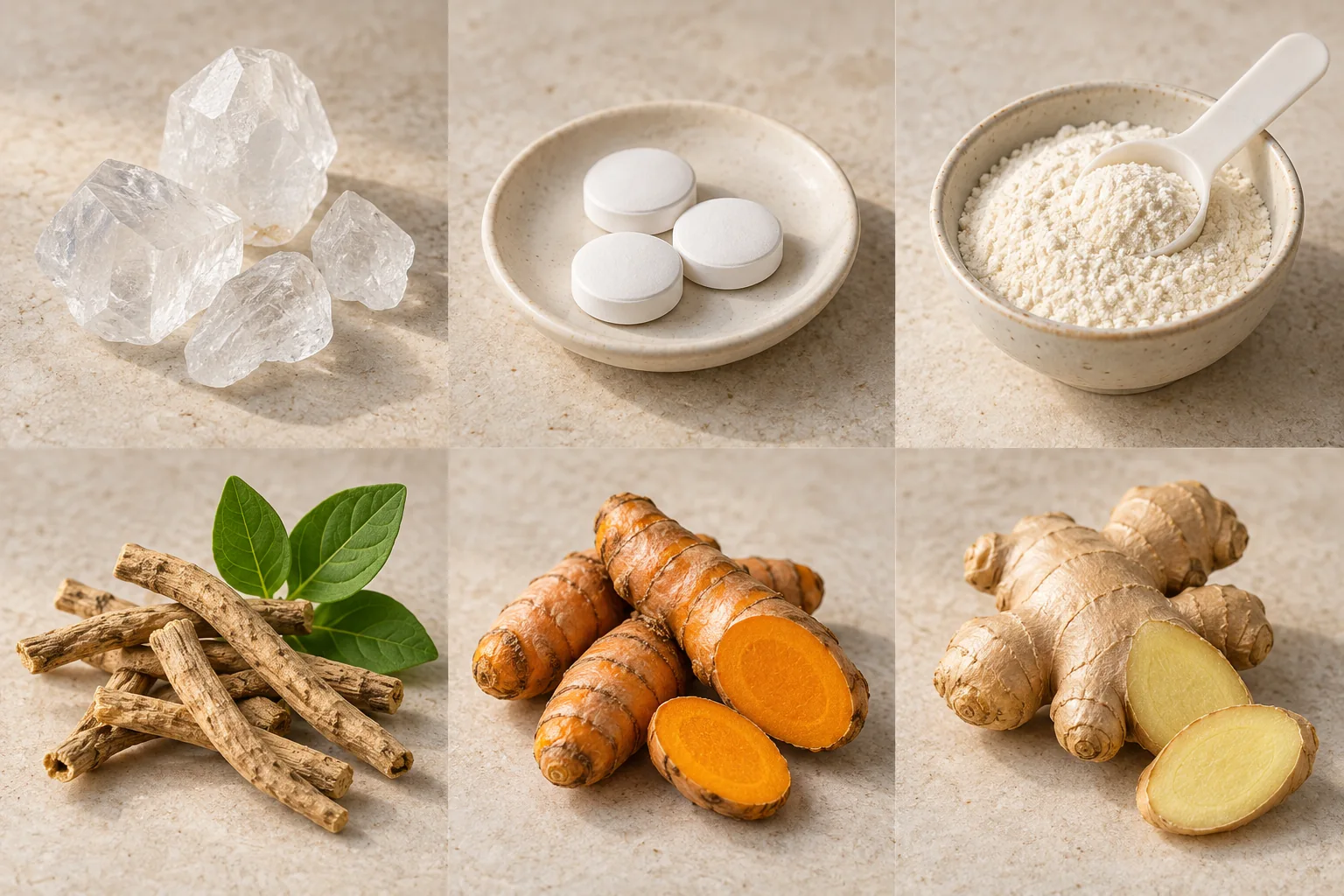
Explore common ingredients through clear definitions, specific questions, and visible sources.
Demonstration guides. These short entries show the intended structure. They are not clinical assessments or personalized recommendations.
Magnesium
Separate the amount of a listed mineral from the product’s serving size, and identify the specific claim you want to examine. This demonstration guide introduces the questions; it does not recommend a formulation or dose.
Read the magnesium claim-review example
Melatonin
For a product presented as a sleep aid, identify the labeled amount per serving and the particular advertised claim. The finished guide should use current authoritative sources and appropriate clinical review.
A complete guide should explain the relevant evidence, limitations, and safety questions in their context.
Collagen
Identify the formulation and outcome behind a product’s claim before comparing it with published research. This sample introduces an evidence-reading approach.
Read the collagen claim-review example
Ashwagandha
A botanical guide should identify the plant preparation or extract under discussion, the claimed use, and the source of each assessment.
Use the NCCIH Herbs at a Glance resource as a starting point for locating authoritative botanical information.
Turmeric
Product labels may describe ingredients and formulations in different ways. A complete guide should specify the exact preparation relevant to the claim being examined.
Learn how to read a Supplement Facts label
Ginger
Define the proposed use and the kind of product being discussed before evaluating evidence. A household ingredient, a concentrated extract, and a finished branded product need clearly identified contexts.
This sample page provides a structure for a future sourced guide rather than a product recommendation.